Blogs
Hit a Curb in Katy? Here’s How Wheel Damage Should Be Properly Inspected
Hit a Curb in Katy? Here’s How Wheel Damage Should Be Properly Inspected

Hitting a curb happens more often than people admit. Tight parking lots, narrow streets, wet roads, and unexpected obstacles can cause a wheel to take impact in seconds. While some damage is obvious, much of the most serious wheel damage isn’t visible at all.
At Katy Wheel Repair, we regularly inspect wheels that “look fine” but are actually bent, cracked, or structurally compromised.
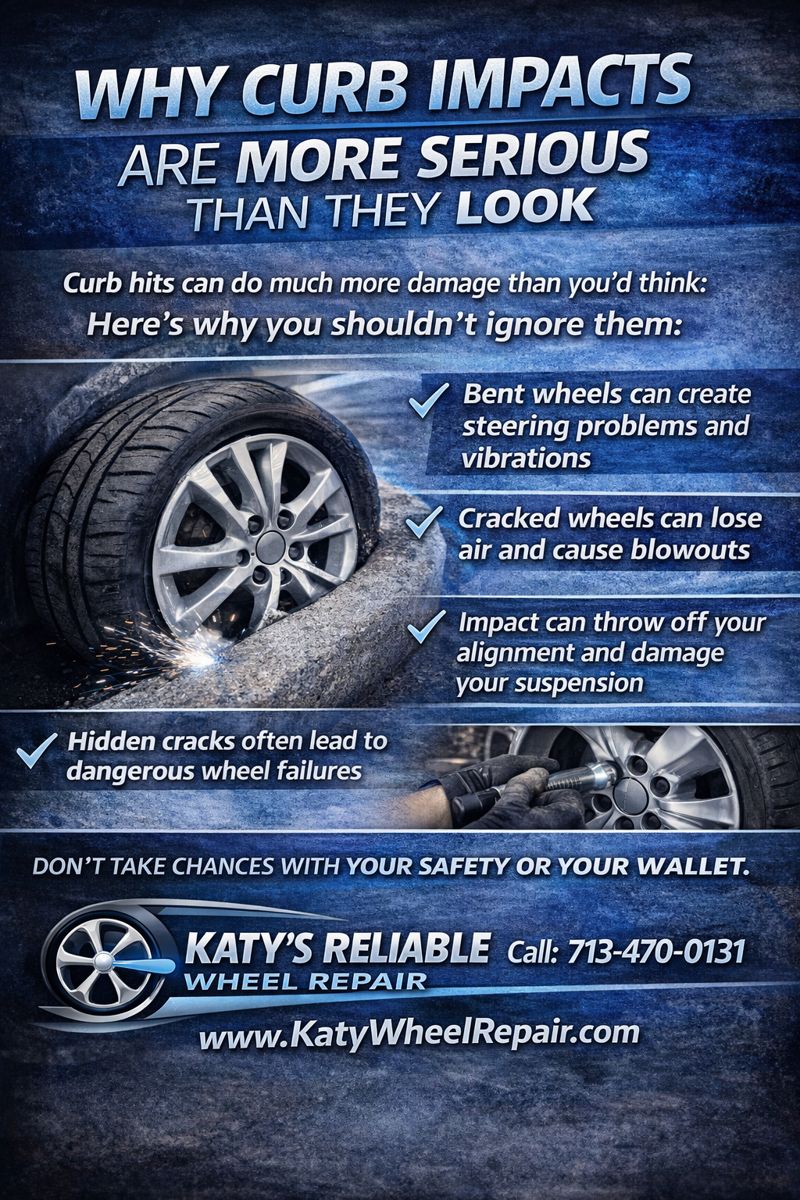
Why Curb Impacts Are More Serious Than They Look

When a wheel hits a curb, the force transfers directly into the rim. Even a low-speed impact can cause damage that affects how the wheel rotates.
Common results include:
Bent inner or outer lips
Hairline cracks
Loss of roundness (runout)
Bead damage that causes slow air leaks
Many of these issues cannot be seen while the wheel is still on the vehicle.
Cosmetic Damage vs. Structural Damage

One of the biggest misconceptions is assuming all curb damage is cosmetic.
Cosmetic damage includes:
Scratches
Scuffs
Curb rash
Structural damage may include:
Bent wheels
Cracks
Warping
Bead seat damage
Cosmetic damage affects appearance. Structural damage affects safety, ride quality, and tire life.
Step 1: Removing the Wheel for Proper Inspection

A proper inspection starts with removing the wheel from the vehicle. Visual checks alone are not enough.
Once removed, we inspect:
The inner barrel (where most bends occur)
The outer lip
The bead seat where the tire seals
Lug areas and mounting surfaces
This is where hidden damage is most often found.
Step 2: Spin Testing and Measurement

Next, the wheel is spin-tested on professional equipment.
This allows us to identify:
Lateral runout (side-to-side wobble)
Radial runout (up-and-down movement)
Irregular rotation patterns
Even small deviations from factory specifications can cause vibration at highway speeds.
Step 3: Checking for Cracks and Stress Points

Cracks are one of the most dangerous forms of wheel damage. They often start small and grow over time.
During inspection, we carefully check:
Spoke junctions
Inner barrel areas
Lip transition points
If cracks are found, we determine whether safe repair is possible or if replacement is the safer option.
Why Driving on a Damaged Wheel Is Risky
Ignoring wheel damage after a curb impact can lead to:
Steering wheel vibration
Tire blowouts
Uneven tire wear
Suspension damage
Loss of air pressure
What starts as a minor issue can quickly become a major safety concern.
Why Professional Inspection Matters
Mobile or quick-check inspections often miss hidden damage because they lack proper equipment.
At Katy Wheel Repair, professional inspection includes:
In-shop testing
Accurate measurements
Structural evaluation
Honest recommendations
Our goal is not to sell unnecessary repairs—it’s to make sure your vehicle is safe and driving correctly.
What to Do Immediately After Hitting a Curb

If you’ve hit a curb:
Avoid highway driving until inspected
Watch for vibration or pulling
Check tire pressure frequently
Schedule a professional wheel inspection
Early inspection can prevent further damage and reduce repair costs.
Get Your Wheel Checked the Right Way
If you’ve recently hit a curb in Katy—even if your wheel looks fine—it’s worth getting it inspected properly.
📞 Call Cory at 713-470-0131 to schedule a professional wheel inspection at Katy Wheel Repair.
We’ll inspect your wheel thoroughly, explain exactly what’s going on, and recommend the safest solution—no guesswork, no shortcuts.
